

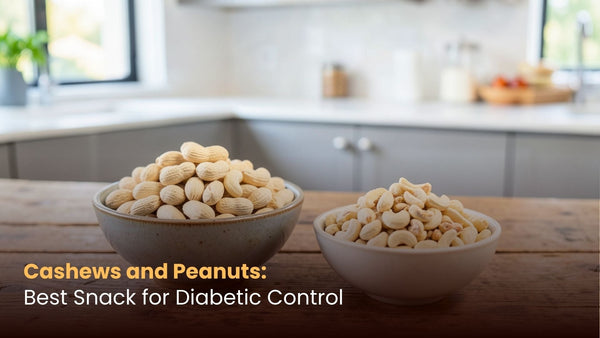
Cashews and peanuts are often misunderstood in diabetic diets, yet when consumed mindfully, they can play a supportive role in blood sugar management. Unlike refined snacks that cause rapid glucose spikes, these nuts provide a balanced mix of healthy fats, plant protein, fibre, and essential minerals that slow digestion and promote steady energy release. Their low glycaemic impact makes them suitable for controlled snacking and meal pairing. Understanding how cashews and peanuts affect insulin response, portion size, and overall metabolic health helps people with diabetes make informed dietary choices without unnecessary restriction.
Why Cashews and Peanuts Aid Diabetic Control
Cashews and peanuts support diabetes management primarily because of their low glycaemic load, healthy fat composition, and ability to slow digestion. Unlike refined snacks that spike blood sugar quickly, nuts release energy gradually. Their combination of fats, protein, and fibre helps reduce post-meal glucose surges and improves overall satiety, which indirectly supports better meal timing and portion control.
For people with diabetes, stable blood sugar matters more than just “low sugar” foods. Nuts help blunt rapid glucose absorption when eaten alone or paired with carbohydrates.
Nutritional Profile of Cashews for Diabetes
Cashews offer a well-rounded nutritional profile that can support blood sugar regulation when included thoughtfully in a diabetic diet. Their fat content is largely made up of monounsaturated fats, which are known to improve insulin sensitivity and help cells use glucose more efficiently. Better insulin response plays a key role in preventing sudden spikes in blood sugar after meals.
Cashews also provide a moderate amount of plant-based protein. Protein slows down the digestion and absorption of carbohydrates, leading to a more gradual rise in blood glucose levels. This makes cashews a useful snack option, especially between meals, as they help maintain satiety and reduce the urge to consume high-glycaemic foods.
Another important nutrient in cashews is magnesium. Magnesium is involved in carbohydrate metabolism and insulin function, and low magnesium levels are commonly observed in people with diabetes. Regular, measured intake of magnesium-rich foods like cashews can contribute to improved glucose control over time.
Although cashews contain slightly more carbohydrates compared to nuts such as almonds or walnuts, they still have a low glycaemic index when eaten in controlled portions. Their natural combination of fats, protein, and fibre offsets the carbohydrate content, ensuring a slower release of glucose into the bloodstream. For people with diabetes, the key lies in portion awareness, as moderate quantities allow cashews to fit comfortably into a balanced, blood sugar–friendly diet.
Nutritional Profile of Peanuts for Diabetes
Peanuts, although botanically classified as legumes, share many nutritional characteristics with tree nuts and are particularly valuable in a diabetes-friendly diet. One of their key strengths is their high plant-based protein content. Protein plays an important role in maintaining muscle mass and supporting metabolic health, both of which are essential for effective glucose utilisation. Higher protein intake also helps reduce post-meal blood sugar fluctuations by slowing the digestion of accompanying carbohydrates.
Peanuts also contain resveratrol, a naturally occurring antioxidant that has been studied for its role in improving insulin sensitivity and reducing inflammation. Improved insulin action helps the body manage circulating glucose more efficiently, which is especially beneficial for individuals with insulin resistance or type 2 diabetes.
Another major advantage of peanuts is their high fibre content. Dietary fibre slows the rate at which glucose enters the bloodstream, resulting in a more controlled rise in blood sugar levels after eating. Fibre also contributes to prolonged satiety, helping reduce frequent snacking and overall calorie intake.
Peanuts have a very low glycaemic index, meaning they cause minimal impact on blood glucose when consumed in reasonable amounts. Their dense nutrient profile, combined with their affordability and wide availability, makes peanuts an easy and sustainable choice for regular inclusion in diabetic meal plans, particularly as a replacement for refined, high-glycaemic snacks.
Cashews and Peanuts: Best Snack Mechanisms
Cashews and peanuts work as effective snacks for diabetes management because of the way they influence digestion and hormonal responses. One of their key benefits is the ability to delay gastric emptying. The healthy fats and protein in these nuts slow the movement of food from the stomach to the intestine, which leads to a more gradual absorption of glucose into the bloodstream. This steady release helps avoid sudden rises in blood sugar after eating.
By slowing digestion, cashews and peanuts also help reduce sharp post-meal insulin spikes. Instead of triggering a rapid insulin response, they support smoother insulin activity, which is particularly important for individuals dealing with insulin resistance or fluctuating glucose levels.
Another important mechanism is their impact on hunger-regulating hormones. Nuts promote the release of satiety hormones while suppressing hunger signals, helping people feel full for longer periods. This reduces frequent snacking and lowers the likelihood of consuming high-sugar or refined foods between meals.
Cashews and peanuts also serve as practical replacements for refined carbohydrate snacks such as biscuits, chips, or sweets, which are common contributors to glucose instability. Consuming nuts in the mid-morning or mid-evening window helps prevent glucose crashes that often lead to overeating later in the day, supporting better overall blood sugar control.
Research Studies on Cashews and Diabetic Control
Research on nut consumption has consistently shown positive outcomes for people managing diabetes, particularly when nuts are used as a replacement for refined carbohydrates rather than an additional calorie source. Clinical and observational studies indicate that incorporating nuts such as cashews into regular meals or snacks can lead to measurable improvements in long-term blood sugar markers, including HbA1c. Since HbA1c reflects average blood glucose levels over several months, even modest reductions suggest better overall glycaemic control.
Studies have also observed improvements in fasting blood glucose when cashews are consumed in controlled amounts. This benefit is largely attributed to their healthy fat content, fibre, and protein, which collectively slow carbohydrate absorption and reduce post-meal glucose spikes. When cashews replace high-glycaemic foods like biscuits, white bread, or sugary snacks, the overall glycaemic load of the diet decreases.
Beyond blood sugar control, research links cashew consumption with improved lipid profiles, including reductions in LDL cholesterol and better HDL balance. This is particularly relevant for people with diabetes, who often face a higher risk of cardiovascular disease. Improved lipid parameters contribute to better heart health alongside glucose management.
The consistent conclusion across studies is that benefits arise from regular, moderate intake. Cashews support diabetic control when eaten in measured portions as part of a balanced diet. Overconsumption, however, may offset these advantages due to excess calorie intake, reinforcing the importance of consistency and portion awareness rather than quantity.
Research Studies on Peanuts and Diabetic Control
Research on nut consumption has consistently shown positive outcomes for people managing diabetes, particularly when nuts are used as a replacement for refined carbohydrates rather than an additional calorie source. Clinical and observational studies indicate that incorporating nuts such as cashews into regular meals or snacks can lead to measurable improvements in long-term blood sugar markers, including HbA1c. Since HbA1c reflects average blood glucose levels over several months, even modest reductions suggest better overall glycaemic control.
Studies have also observed improvements in fasting blood glucose when cashews are consumed in controlled amounts. This benefit is largely attributed to their healthy fat content, fibre, and protein, which collectively slow carbohydrate absorption and reduce post-meal glucose spikes. When cashews replace high-glycaemic foods like biscuits, white bread, or sugary snacks, the overall glycaemic load of the diet decreases.
Beyond blood sugar control, research links cashew consumption with improved lipid profiles, including reductions in LDL cholesterol and better HDL balance. This is particularly relevant for people with diabetes, who often face a higher risk of cardiovascular disease. Improved lipid parameters contribute to better heart health alongside glucose management.
The consistent conclusion across studies is that benefits arise from regular, moderate intake. Cashews support diabetic control when eaten in measured portions as part of a balanced diet. Overconsumption, however, may offset these advantages due to excess calorie intake, reinforcing the importance of consistency and portion awareness rather than quantity.
Comparing Cashews and Peanuts for Diabetes Management
Both work well for diabetes, but peanuts are more forgiving in portion size, while cashews require slightly more restraint.
Portion Sizes and Daily Intake Guidelines
Portion size plays a crucial role when including nuts in a diabetic-friendly diet. Even though cashews and peanuts have a low glycaemic impact, they are energy-dense foods, which means excess intake can quickly add to daily calorie consumption. For most people with diabetes, a safe and practical daily portion is around 10 to 12 whole cashews or 20 to 25 peanut kernels. These quantities provide the nutritional benefits of healthy fats, protein, and minerals without placing unnecessary strain on blood sugar or weight management goals.
Cashews and peanuts are best consumed as standalone snacks, particularly between meals, to help control hunger and prevent sudden dips in energy that may lead to overeating later. They also work well when added to salads or paired with non-starchy vegetables, as the fibre from vegetables further slows glucose absorption and improves satiety.
It is important to choose plain, unsalted, and unsweetened varieties. Added salt may contribute to high blood pressure, a common concern for people with diabetes, while sugar-coated or flavoured nuts can negate blood sugar benefits. While blood glucose levels may remain stable even with higher nut intake, consistent overconsumption can lead to excess calorie intake and unintended weight gain, which may indirectly affect long-term diabetic control.
Healthy Recipes with Cashews and Peanuts
- Dry-roasted peanuts with spices (no oil)
- Cashew-based vegetable stir-fry
- Peanut chutney with minimal jaggery
- Cashew and seed trail mix for mid-day hunger
Avoid honey-roasted or sugar-coated versions.
Potential Risks and Precautions
- Portion control is essential
- Salted varieties may affect blood pressure
- Nut allergies must be ruled out
- Not a replacement for medication
People with kidney disease should consult their doctor due to potassium and phosphorus content.
Case Studies on Diabetic Control with Nuts
Case 1: A 45-year-old office professional replaced biscuits with peanuts for evening snacks and observed improved fasting glucose within eight weeks.
Case 2: A 52-year-old woman added measured cashew portions to lunch salads and reported better satiety and reduced post-meal sugar spikes.
Case 3: A senior diabetic individual used peanuts as a protein source between meals and experienced fewer hypoglycaemic episodes.
Conclusion
Cashews and peanuts offer a practical, affordable, and scientifically supported way to support diabetes management when consumed mindfully. Their ability to stabilise blood sugar, reduce cravings, and replace refined snacks makes them valuable additions to a diabetic-friendly diet. Choosing high-quality, clean, and minimally processed nuts matters—and brands like Krishival focus on purity and sourcing, which aligns well with long-term health goals. Consistency, moderation, and quality together make the real difference.
Frequently Asked Questions
1. Can diabetics eat cashews daily? Yes, but only in controlled portions. Around 10–12 cashews per day is generally safe for most diabetics.
2. Are peanuts better than cashews for diabetes? Peanuts have a slightly lower glycaemic impact and higher protein, making them easier for regular consumption.
3. Do nuts increase blood sugar levels? No, when eaten alone or with fibre-rich foods, nuts usually stabilise blood sugar rather than raise it.
4. Is peanut butter safe for diabetics? Yes, if it is unsweetened and free from hydrogenated oils. Portion size still matters.
5. Should nuts be eaten raw or roasted? Dry-roasted or raw nuts are best. Avoid oil-fried or sugar-coated versions.
6. Can nuts replace a meal for diabetics? They should not replace balanced meals but work well as snacks or meal complements.
7. Are salted peanuts bad for diabetics? Excess salt can affect blood pressure, which is risky for diabetics. Unsalted options are preferable.
8. Do nuts help with insulin resistance? Yes, healthy fats and magnesium in nuts support improved insulin sensitivity.
9. How soon can benefits be noticed? Some people notice better satiety and stable readings within a few weeks, but long-term consistency matters more.
10. Can nuts help prevent type 2 diabetes? Regular nut consumption is associated with a lower risk when combined with a balanced diet and active lifestyle.



Share Your Thoughts