

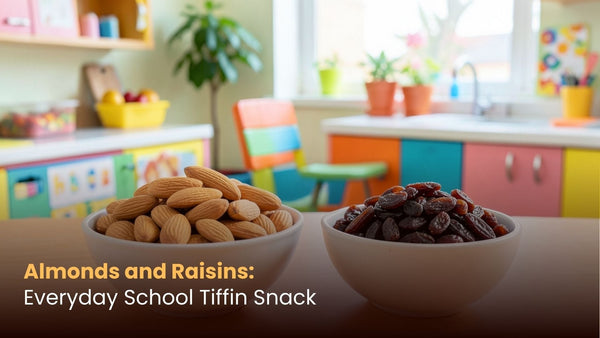
Almond and raisin make a simple yet powerful combination for a school tiffin snack. Almond provides protein, healthy fats, and vitamin E that support brain development and steady energy. Raisin adds natural sweetness, quick energy, iron, and fibre that help keep kids active and focused through school hours. Together, almond and raisin create a balanced snack that is easy to pack, easy to eat, and naturally nutritious. This pairing works well for busy mornings because it needs minimal preparation while still meeting daily nutrition needs. For parents looking to replace processed snacks, almond and raisin offer a reliable, wholesome option that fits perfectly into a child’s routine.
Why Almonds and Raisins Make the Perfect School Tiffin Snack
Packing a school tiffin often means finding a snack that children will actually enjoy eating while still meeting their nutritional needs. Almonds and raisins manage to strike this balance naturally. Almonds offer a satisfying crunch, while raisins bring a mild, natural sweetness, making the combination appealing even to picky eaters. This taste profile helps children enjoy their snack without feeling like they are being forced to eat something “healthy.”
From a nutrition point of view, almonds and raisins provide steady energy rather than short sugar spikes. Almonds contain healthy fats and protein that help keep children fuller for longer, reducing mid-morning hunger. Raisins supply natural carbohydrates that give a quick energy boost, which is especially helpful during active school hours filled with classes, playtime, and sports. Together, they support both sustained focus and physical activity throughout the day.
Another reason this pairing works well is its clean ingredient profile. Almonds and raisins are whole foods with no need for added sugars, artificial colours, or preservatives. This makes them a dependable alternative to packaged snacks that often contain hidden additives. Parents can feel confident knowing exactly what their child is eating, with no processing or unnecessary ingredients involved.
Practicality is also a major advantage. Almonds and raisins are easy to portion, don’t require reheating, and travel well in a school bag without spoiling. They can be packed as a simple dry snack, mixed into trail blends, or incorporated into small homemade treats like energy bites. This flexibility allows parents to rotate formats while keeping the core ingredients consistent, making almonds and raisins a reliable, everyday school tiffin choice.
Nutritional Benefits of Almonds and Raisins for Kids
Almonds are rich in healthy fats, plant protein, vitamin E, magnesium, and calcium, all of which contribute to overall growth and development. Raisins, on the other hand, provide natural sugars for quick energy, along with iron, potassium, and dietary fibre. Together, they create a balanced snack that offers both sustained energy and essential micronutrients.
This combination supports brain function, muscle development, and bone strength, making it especially useful for school-going children who need consistent nourishment for both physical and mental activity.
Health Advantages for Growing Children
For growing kids, regular intake of nuts and dried fruits can support multiple aspects of health. Almonds help in maintaining healthy bones and teeth due to their calcium and magnesium content. The vitamin E in almonds acts as an antioxidant, supporting immune health. Raisins aid digestion because of their fibre content and help prevent iron deficiency, which is common in children.
Together, almonds and raisins help keep children fuller for longer, reducing the urge to snack on junk food during school hours and after returning home.
Simple Recipes for Almonds and Raisins School Tiffin Snack
These recipes are designed to be quick, fuss-free, and kid-approved, making them practical for busy mornings.
Quick No-Cook Almonds and Raisins Mix
Soak almonds overnight, peel them in the morning, and mix with a small handful of raisins. This soft texture is easier for younger kids to chew and digest. You can portion it into small containers for easy packing.
Baked Energy Bites with Almonds and Raisins
Finely chop almonds and raisins, mix them with mashed dates or a little honey, shape into small balls, and lightly bake. These energy bites hold well in tiffins and feel like a treat while still being nutritious.
Almond Raisin Trail Mix Variations
Combine chopped almonds and raisins with puffed rice, roasted makhana, or a few seeds like pumpkin or sunflower seeds. This adds texture and variety without compromising nutrition.
Storage and Preparation Tips for School Tiffins
Storing almonds and raisins correctly plays an important role in preserving their taste, texture, and nutritional value for school tiffins. Almonds and raisins should always be kept in clean, airtight containers to protect them from moisture, heat, and insects. Exposure to humidity can make almonds lose their crunch and cause raisins to become sticky or spoil faster. It is best to store them in a cool, dry place, and during warmer months, refrigeration can help extend freshness without affecting quality.
When soaking almonds, it is advisable to soak only the quantity required for the next school day. Soaked almonds have a shorter shelf life and can spoil quickly if left at room temperature for too long. After soaking overnight, almonds should be rinsed, peeled if preferred, and stored in a covered container in the refrigerator until packing the tiffin. This ensures they remain fresh, soft, and safe for consumption.
Portion control is equally important while preparing school snacks. Almonds and raisins are nutrient-dense, so small servings are sufficient to provide energy and essential nutrients. Overpacking can reduce a child’s appetite for other meals and may lead to unnecessary calorie intake. Measuring portions or using small containers helps maintain consistency and balance in daily tiffins.
Using compartmentalised tiffin boxes is a practical way to pack almonds and raisins neatly. Separate compartments prevent moisture transfer from other foods and help retain the natural texture of the snack. This also makes the tiffin visually organised and more appealing for children, encouraging them to enjoy their food without mixing flavours or textures unintentionally.
Fun Ways to Make It Appealing to Kids
Fun ways of presenting food can completely change how children respond to it, especially in a school tiffin. Almond and raisin snacks become far more exciting when they look different from everyday food. Energy bites can be shaped into small balls, stars, or even smiley faces using simple moulds, making them feel like a treat rather than a “healthy snack.” Using colourful mini containers or bento-style tiffin boxes helps separate the snack neatly and adds visual appeal when the box is opened.
Giving the snack a fun name also makes a difference. Names like power pearls, brain boosters, or superhero bites create curiosity and make children feel they are eating something special. Involving kids in preparation, such as mixing almonds and raisins or choosing the container for the day, builds a sense of ownership. When children participate, they are more likely to enjoy and finish what’s packed for them.
Case Study: School Nutrition Success Stories
Many parents who consciously replaced packaged snacks with almonds and raisins began noticing gradual yet meaningful changes in their children’s daily routine within a few weeks. Children who earlier complained of hunger between classes reported feeling more satisfied and energetic until lunchtime. Teachers informally shared that these students appeared more attentive during lessons and less restless during long school hours. Parents also observed a clear reduction in after-school cravings for chocolates, biscuits, and sugary drinks, making evenings calmer and more structured.
In one specific instance, a parent of a seven-year-old noticed frequent digestive discomfort and irregular bowel habits earlier. After introducing soaked almonds and raisins as a regular tiffin component, the child experienced smoother digestion and fewer complaints of stomach heaviness. The soft texture of soaked almonds combined with the fibre from raisins made the snack easier to digest. Over time, this simple dietary change helped build a consistent, healthier snacking habit that supported both energy levels and overall well-being.
Common Mistakes to Avoid
One of the most frequent mistakes parents make is assuming that more always means better. Almonds and raisins are highly nutritious, but they are also calorie-dense, and overpacking them in a tiffin can reduce a child’s appetite for regular meals like lunch. Large portions may also make the snack feel heavy, leading to discomfort during school hours. Keeping portions small and balanced ensures children get the benefits without excess calories.
Another common oversight is giving whole, hard almonds to very young children. Unsoaked almonds can be tough to chew and may pose a choking risk. For younger age groups, almonds should be soaked, peeled, finely chopped, or powdered to make them easier to consume and digest.
Parents also sometimes combine almonds and raisins with chocolate chips, sugar syrups, or sweetened coatings to make the snack more “fun.” This adds unnecessary sugar and reduces the overall nutritional value. Keeping the snack close to its natural form preserves its health benefits and helps build better eating habits from an early age.
Conclusion
Almonds and raisins are a timeless school tiffin combination that supports energy, growth, and overall well-being without relying on processed foods. When sourced fresh and prepared thoughtfully, they fit seamlessly into a child’s daily routine. Choosing quality ingredients matters, and brands like Krishival focus on premium nuts and dried fruits that align well with mindful snacking habits. With simple preparation and a little creativity, this snack can become a dependable favourite in every school tiffin.
Frequently Asked Questions
- Are almonds and raisins suitable for daily school tiffins? Almonds and raisins can be safely included in a child’s school tiffin on a daily basis when given in moderate portions. They provide a natural source of energy, healthy fats, vitamins, and minerals that support growth and concentration. Since they do not contain artificial colours, flavours, or preservatives, they are a more reliable everyday option compared to processed snacks that may cause energy crashes or poor appetite later in the day.
- How many almonds and raisins should a child eat per day? For most school-going children, a daily portion of about 4 to 6 almonds along with a small handful of raisins is generally sufficient. This quantity offers nutritional benefits without adding excess calories. The exact portion can be adjusted depending on the child’s age, body size, activity level, and overall diet, especially if nuts and dried fruits are also included in other meals.
- Should almonds be soaked before giving them to kids? Soaking almonds overnight and peeling them the next morning makes them softer and easier for children to chew and digest. This method is particularly helpful for younger kids or those with sensitive digestion. While older children can consume raw almonds comfortably, soaking can still be beneficial as it improves texture and may reduce digestive discomfort for some children.
- Can almonds and raisins replace biscuits or packaged snacks? Almonds and raisins are a healthier alternative to biscuits, chips, and other packaged snacks commonly found in school tiffins. They do not contain refined sugar, trans fats, or artificial additives, which are often linked to low energy and poor eating habits. Replacing processed snacks with this natural combination helps children develop a preference for wholesome foods from an early age.
- Are raisins too sugary for children? Raisins do contain natural sugars, but they also provide fibre, iron, and essential minerals that help balance their sugar content. When consumed in controlled portions, raisins do not cause the sharp sugar spikes associated with sweets or chocolates. Pairing raisins with almonds further helps slow down sugar absorption, making the snack more balanced and suitable for children.
- Can this snack help improve concentration in school? Almonds contain healthy fats, protein, and micronutrients that support brain health and cognitive function. Raisins supply quick energy that helps children stay alert during long school hours. Together, they provide a steady energy release, which may help improve focus, reduce mid-class fatigue, and support better attention during lessons and activities.
- Is this snack suitable for toddlers? Almonds and raisins can be included in a toddler’s diet with proper preparation. Almonds should be soaked, finely chopped, powdered, or mashed to avoid choking risks. Whole almonds should not be given to toddlers. Raisins should also be cut or mashed if needed. Introducing these foods in safe forms helps toddlers benefit from their nutrition without safety concerns.
- How long can almond and raisin snacks stay fresh in a tiffin? Dry almond and raisin mixes generally stay fresh for the entire school day when stored in clean, airtight containers. Moisture should be avoided, as it can reduce shelf life and affect taste. If soaked almonds are used, they should be packed in a sealed container and ideally consumed within a few hours to maintain freshness.
- Can almonds and raisins be combined with other foods in the tiffin? Almonds and raisins pair well with a variety of other tiffin items. They can be added alongside fruits, homemade energy bites, light parathas, or sandwiches to create a more balanced meal. This flexibility makes them easy to include without changing the overall structure of a child’s school lunch.
- What should parents look for when buying almonds and raisins? Parents should choose almonds and raisins that are fresh, clean, and free from added sugars, oils, or artificial coatings. Proper packaging helps maintain quality and hygiene. Sourcing from trusted brands or suppliers ensures better taste, texture, and nutritional value, making the snack safer and more enjoyable for children.

Share Your Thoughts